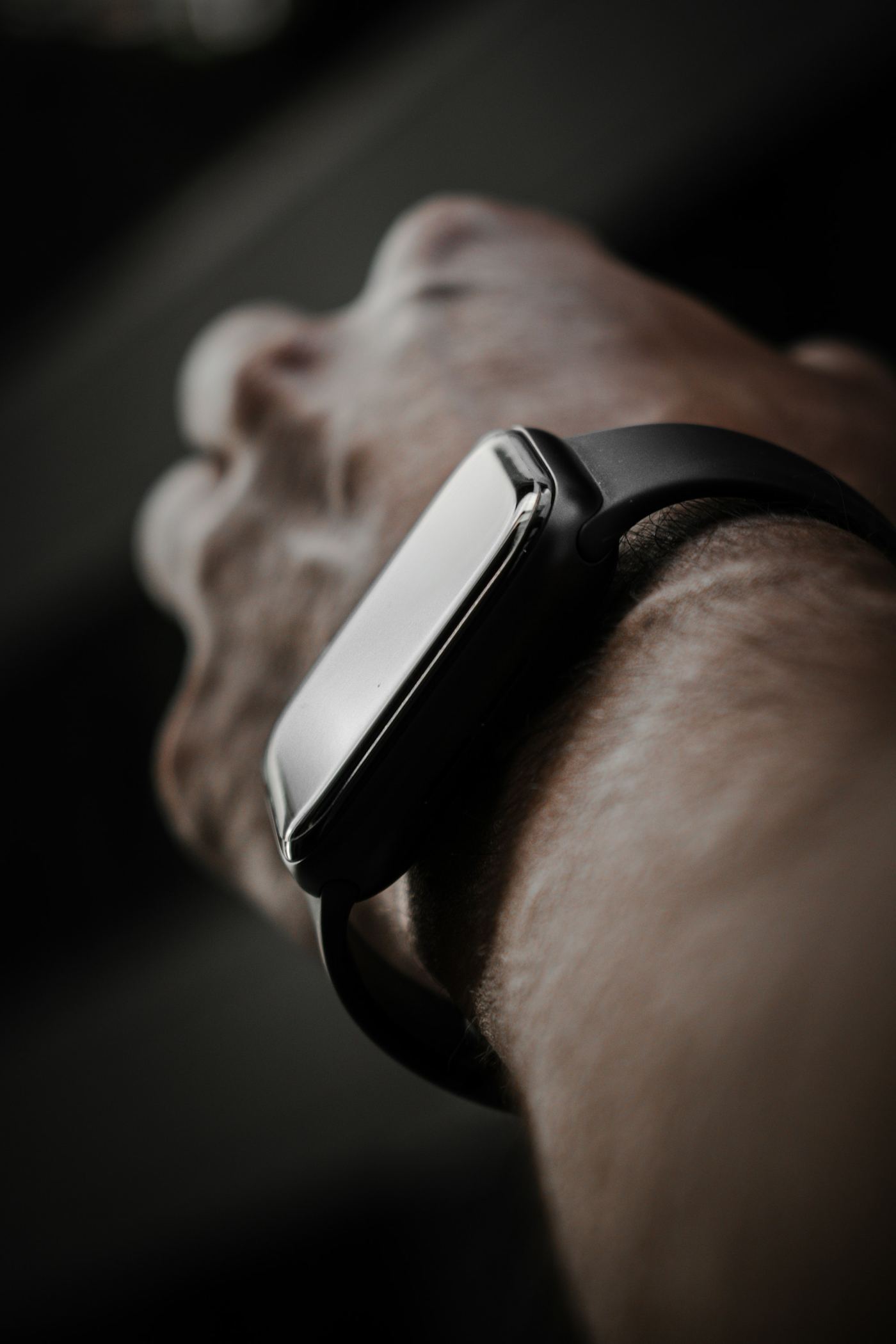
Many sleep studies ask you to wear a small band on your wrist for a few weeks, day and night. It notes how much you move and how much light reaches you, which together show when you sleep and wake in ordinary life. This guide explains how it differs from a fitness tracker, how to wear it, when to press its button and how to give it back.
What the band notes through the day and night
The band holds a motion sensor that registers how much your wrist moves, many times a minute, and a light sensor that registers how bright your surroundings are. Long still stretches at night usually mean sleep. Weeks of that pattern show when your body clock lets you fall asleep and wake, which is why the band is so useful in insomnia and body clock research.
It does not record sound, location, messages or pictures. It cannot see breathing or dreams, and it does not sort sleep into stages the way scalp sensors in a lab can.
How it differs from a fitness tracker or phone app
A consumer tracker is built to show you numbers and keep you checking them. A research band is built to stay out of your way. The differences are worth knowing:
- It often has no screen, or shows only the time, so there is no sleep score to fret over
- It does not connect to your phone, and the data stays on the band until the team reads it
- It uses a method researchers have compared with full lab recordings over many years
- It keeps the raw movement and light readings instead of turning them into a verdict
- It belongs to the study and goes back when the weeks are up
Wearing the band for weeks at a stretch
The band usually goes on the wrist of the hand you write with less, fitted snugly enough not to slide about. Keep it on in bed, at work and at weekends, since gaps make the record hard to read. Ask whether yours can stay on in the shower; some can and some cannot. If you take it off, put it back on as soon as you are able.
Try not to let a sleeve cover the band all day, because the light sensor needs to see the room. Morning daylight, an evening on screens and a dark bedroom all show up in the record and matter for body clock studies. Live your usual week rather than a tidier version of it.
Pressing the button at lights out
Most bands have one small button. You press it when you switch the light off to sleep and again when you get up for the day, which marks where each night begins and ends. Some studies also ask for a press when you lie down for a nap or wake for a while in the night.
Forgetting a press now and then is normal. The movement pattern usually shows roughly when you settled, and a quick note of the time, if the study asks for one, covers the rest.
Handing the band back at the end
When the weeks are over you return the band at a visit or post it in the packaging it came in. The team downloads the record and reads it together with anything else the study gathers. The band has no result to show you on its own.
If the strap rubs, a rash starts under it or the band stops working, tell the study team straight away instead of waiting until the end. A swap or a looser fit is easy to arrange.
- A research band records movement and light, day and night, for a few weeks.
- It has no app and no sleep score, and the data stays on the band.
- Wear it all the time and keep sleeves off it, so the light sensor can see.
- Press its button when the light goes off and again when you get up.
- Give it back at the end, and tell the team early if it rubs or stops working.