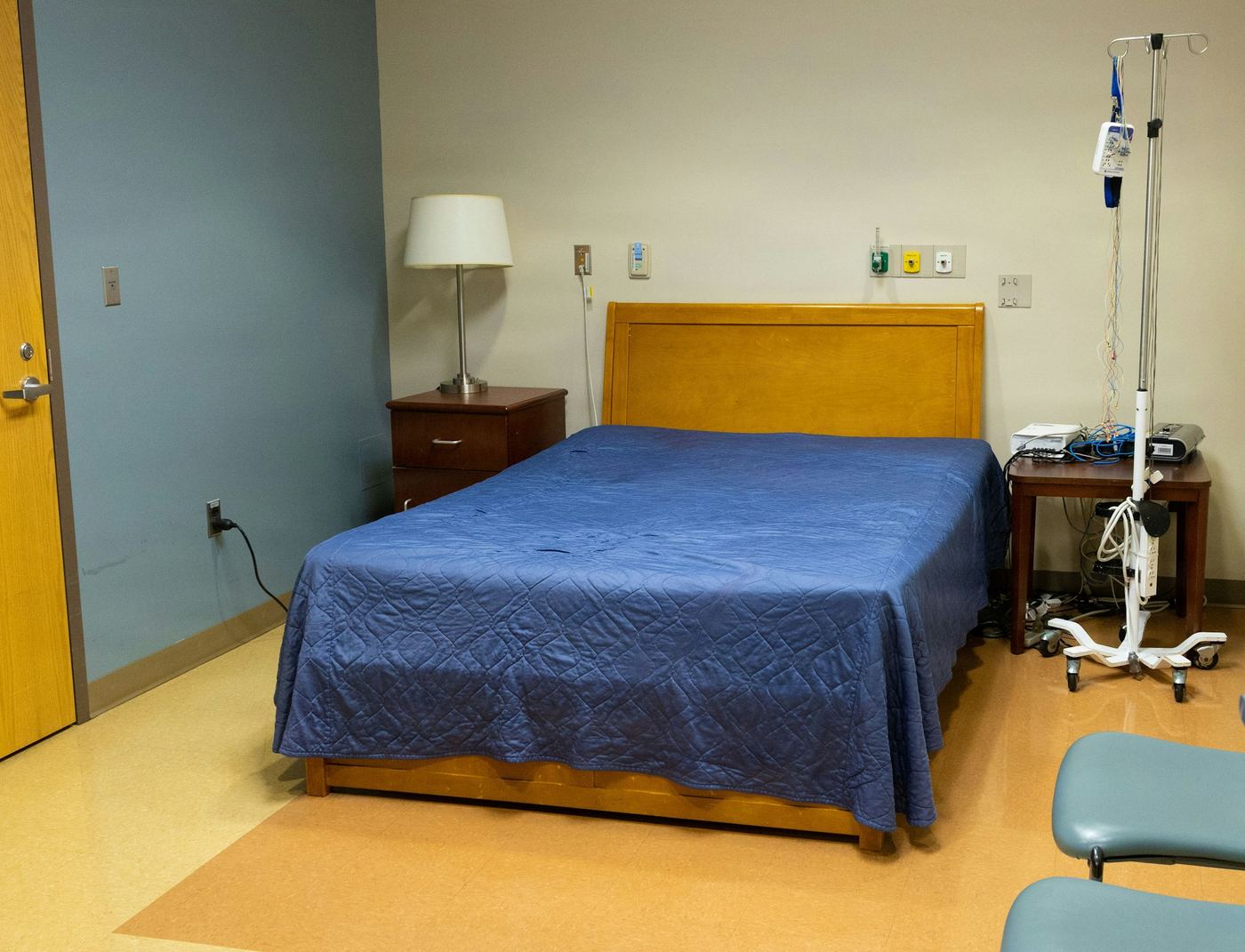
An overnight study in a sleep lab records your brain waves, breathing, heart rhythm and muscles while you sleep in a private bedroom. This guide follows one night in the order it happens: checking in during the evening, the wiring-up, lights out, getting up in the night and leaving in the morning. Most people sleep better than they expect, and the staff have seen every kind of night before yours.
Checking in with an overnight bag
You usually arrive in the evening, a couple of hours before your normal bedtime, and meet the sleep technologist who stays awake through the night. The building is quiet at that hour: a corridor of bedrooms and a control room at one end. Eat dinner before you come unless the study team says otherwise, and take your usual medicines the way your own doctor prescribed them.
Packing for the night is simple, and a few things make it easier:
- Loose two-piece nightclothes, since sensors go on the chest and the legs
- Your own pillow, if an unfamiliar one keeps you awake
- Clean, dry hair with no oil, gel or spray, so the scalp sensors hold
- A book or something quiet for the hour before lights out
- Clothes and a toothbrush for the morning
The bedroom and the wiring-up
The bedroom looks more like a plain hotel room than a hospital ward, with a proper bed, a lamp and a door that closes. Before bed the technologist measures your head with a soft tape, marks a few spots with a washable pencil and fixes small discs on with paste and tape. Nothing pierces the skin or sends anything into your body. Every sensor only listens.
Each sensor watches one part of the night:
- Discs on the scalp pick up brain waves, which show when you fall asleep and which stage of sleep you are in
- Small pads beside the eyes follow eye movements, which change sharply in dream sleep
- A pad on the chin tracks muscle tone, and pads on each shin catch leg movements
- Stickers on the chest follow the heartbeat, and soft belts round the chest and belly show the effort of each breath
- A thin tube under the nose senses each breath of air, and a fingertip clip tracks oxygen levels through the night
The camera, the microphone and the person down the hall
A small infrared camera and a microphone record the room in the dark, so the team can see how you lie and hear snoring, talking or gasping. The technologist follows the recording live from the control room and can speak to you through an intercom. Shouting, kicking or sitting up during a dream is exactly what some studies need to see, so nobody on shift is shocked by it.
If a sensor works loose in the night, the technologist may slip in quietly to press it back down. That is routine on any shift, and most people settle again within a few minutes.
Sleeping wired up, and getting up in the night
The wires gather into a small box beside your pillow or clipped to your nightclothes, with enough slack to turn over and lie on your side or front. Plenty of people expect to lie awake until dawn and find they sleep reasonably well. Even a lighter night than usual tells the team a good deal about how you sleep.
Needing the bathroom is normal. Say so out loud or press the call button, and the technologist unclips the box so you can walk down the hall with the wires bundled over one arm, then plugs you back in. Leave every sensor where it is, even one that itches, and let the technologist deal with it.
Leaving the lab in the morning
The technologist usually wakes you early, around the time many people get up for work, and takes the sensors off. The paste rinses out with warm water, though a little may stay in your hair until you shower at home. You may answer a few short questions about how long you think you slept and how the night compared with a usual one.
The technologist records the night but does not interpret it for you. A sleep doctor or the study team reads the full recording later and explains what it shows. After a short or broken night you may feel drowsy, so have someone collect you instead of driving yourself home.
- You arrive in the evening and sleep in a private bedroom with a door that closes.
- Sensors on the scalp, face, chest, legs and finger only listen and never go into the skin.
- A technologist watches all night from down the hall and can hear you through an intercom.
- Ask for help getting up in the night rather than unplugging anything yourself.
- Results come later from the team, and a ride home is wise after a short night.